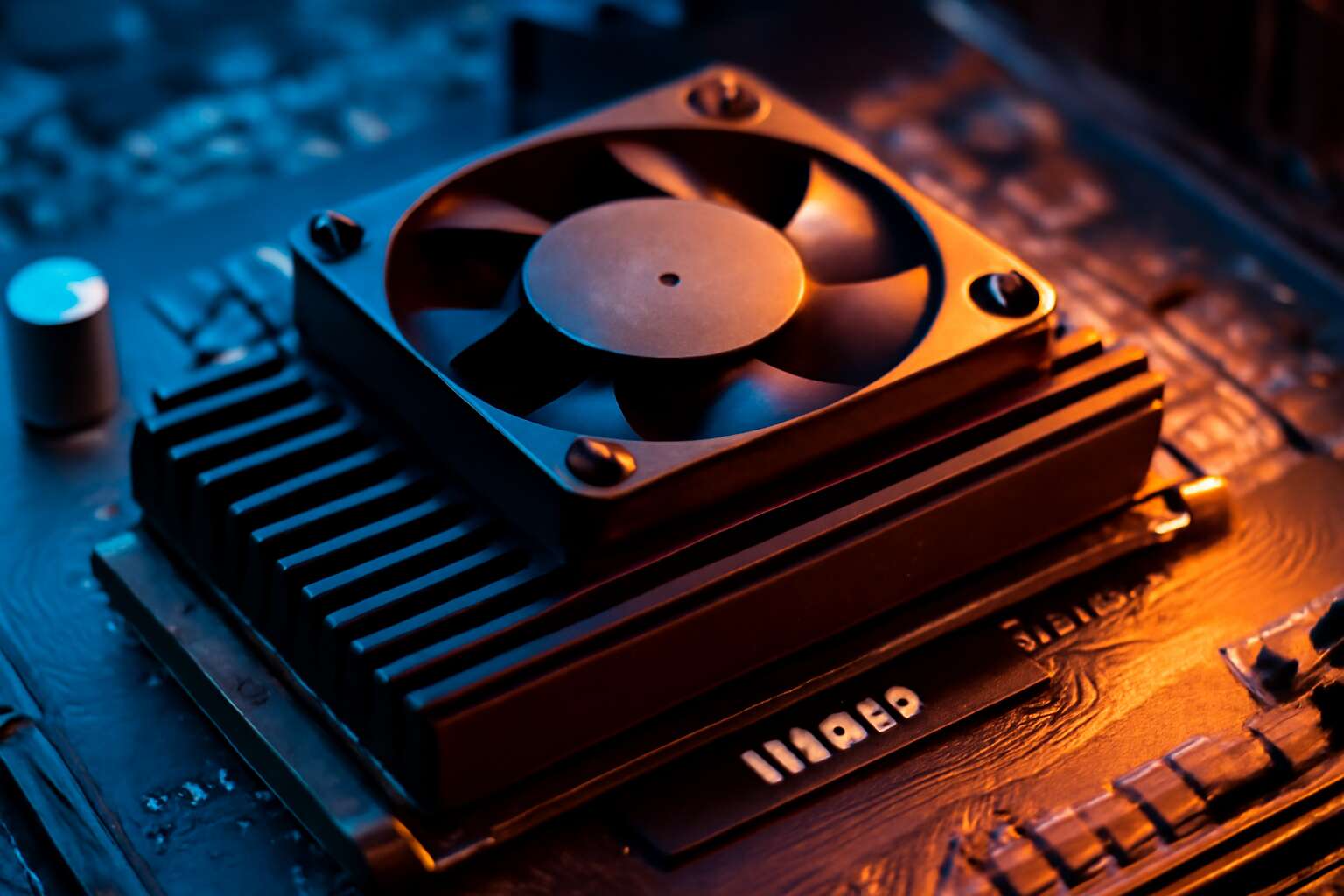
Understanding NVMe overheating basics
What NVMe overheating means and how it manifests
In high-speed data streams and crowded server spaces, NVMe drives pulse with speed. Performance labs show temperatures rising quickly under sustained workloads, and the question can nvme overheat surfaces as a practical concern. In plain terms, overheating means the silicon hits a heat ceiling that triggers protective throttling, slowing reads and writes before damage can occur.
Understanding the basics: overheating is a thermal limit problem, not a magic mystery. It manifests as rising drive temps, throttled performance, and fans that suddenly wake. Here are common signals to notice:
- Temps approach 70–85°C in sustained workloads
- Thermal throttling reduces bandwidth
- Increased fan activity and longer data bursts
In this light, the NVMe’s heat story becomes a readable map for professionals navigating SA’s data-heavy workflows, where speed and reliability must dance in step with the environment.
Typical temperature ranges for NVMe drives in different form factors
Across South Africa’s data floors, tiny NVMe engines sprint through oceans of data with fearless velocity. can nvme overheat? The answer hinges on heat, not magic, and on how a drive is cooled. In the right conditions, sustained bursts push temps toward a protective throttle, turning speed into measured balance rather than reckless warmth.
Typical temperature ranges by form factor vary with mounting and cooling:
- M.2 2280 NVMe: idle around 30–40°C; under sustained load, often 60–85°C depending on airflow.
- U.2 NVMe drives: idle roughly 28–38°C; under load 60–80°C with enterprise cooling.
- PCIe add-in cards: idle about 32–42°C; loaded 65–85°C in dense racks.
These envelopes empower SA professionals to map heat in dense racks, and they can help answer can nvme overheat questions as workloads rise, turning bottlenecks into navigable terrain.
How heat is generated in NVMe SSDs during operation
Across South Africa’s data floors, the hum is a clue to a hidden drama. The question remains: can nvme overheat? The answer isn’t magic—it’s simple physics: heat rises with workload, and cooling determines whether speed remains a calculated edge or a risk that lingers at the edge of throttle.
During operation, transistors switch at blistering speeds, turning electrical energy into heat. Read/write bursts, caching, and wear-leveling all add to the clockwork of warmth. How a drive is cooled—airflow, mounting, and enclosure design—decides whether that heat is safely shed or trapped.
- Duty cycle and burst IO patterns
- Ambient temperature and airflow pathways
- Thermal throttling behavior and thermal margins
These battles of heat let SA professionals map density and performance without guessing.
Role of thermal throttling in protecting NVMe devices
In the glow of South Africa’s data floors, the question lingers: can nvme overheat? Not as a fable, but as physics wearing a silicon shawl: heat climbs with workload, and cooling writes the margin between speed and shutdown!
Thermal throttling stands as a quiet guardian, lowering clocks to keep silicon safe!
- Duty cycle and burst IO patterns
- Ambient temperature and airflow pathways
- Thermal throttling behavior and thermal margins
For SA professionals, these dynamics map density and performance without guessing. The tale they tell informs design choices that align with real workloads.
Common causes and risk factors for NVMe overheating
Inadequate cooling in compact builds and small form factor PCs
This is a world where tiny drives carry mountains of data, and the heat they generate is a quiet antagonist. When summers peak in South Africa, the question becomes: can nvme overheat in everyday rigs? The answer isn’t simply yes or no; it hinges on heat that builds up and finds a path out. Subtle risk factors—dense hardware layouts, bursts of sustained activity, and rooms that don’t shed heat—quietly tilt the balance.
Some patterns emerge as common contributors. The following factors frequently push NVMe drives toward their limits:
- Restricted airflow in small-form-factor cases
- High ambient temperatures that compound heat buildup
- Sustained heavy I/O and long-running tasks
Beyond these, aging thermal interfaces, crowded M.2 slots, and heat from neighboring components amplify the problem. In South Africa, hotter months and spaces without robust cooling can magnify even ordinary workloads. The situation is less about a single fault and more about how design choices and climate converge to shape performance and risk.
Impact of case airflow and cable management on NVMe temperatures
South Africa’s summer heat pushes rooms into the red, and the drive inside may be listening for mercy. We ask: can nvme overheat? In hot offices, a quick burst of sustained I/O can creep toward the edge of safe temperatures—where cooling becomes the true limiter.
Common causes lean on how a case handles heat: component groups, cables that tangle near heat sources, and a chassis whose airflow path is obstructed by drives hogging space. Each factor nudges the NVMe toward warmer operation, especially when ambient air climbs.
Case airflow and cable management shape NVMe temperatures as if by a quiet spell. Consider these flow-friendly factors:
- Airflow pathways and unobstructed exhaust that keep NVMe cool
- Cable routing that avoids vent blockage and tight bundles
- Proximity to other heat sources and crowded M.2 slots
In SA contexts, these subtleties decide whether a workload remains smooth or mutates into a thermal thriller.
Effect of sustained heavy workloads and high queue depth on heat build-up
South Africa’s summer pushes rooms into the red, and a busy NVMe drive can feel the pressure as heat climbs. The question lingers: can nvme overheat. A sustained burst of I/O or a long, relentless queue can push temperatures toward unsafe edges, where ambient air becomes the true limiter.
Common risk factors arise from workload behavior and hardware layout:
- Sustained heavy workloads that force continuous high power draw as the drive services data blocks.
- High queue depth, stacking many simultaneous requests and every one takes its turn to heat the device.
- Multiple NVMe drives packed in a compact chassis, leaving little space for heat to dissipate.
- Fluctuating power delivery or throttling that can hide temperature spikes while the device works to catch up.
- Aging thermal interface materials or cooled heatsinks that lose efficiency over time.
Firmware, controller design, and warranty implications related to heat
South Africa’s summer drapes data halls in copper haze, and the NVMe chorus hums beneath oven-hot air. The question lingers: can nvme overheat? It stalks the seam where firmware intent meets controller craft, where a relentless burst of I/O can turn a quiet drive into a furnace.
Three risk factors emerge from the shadows of design and policy, shaping what happens when heat forgets its manners:
- Firmware that misreads thermal data or enacts overly aggressive power profiles.
- Controller design choices that chase peak bandwidth at the expense of heat management.
- Compact enclosures stacking multiple drives, leaving little room for heat to escape.
Warranty terms may hinge on how cooling is preserved and whether thermal stress is treated as normal wear or a fault—a distinction that varies by vendor and region, especially in SA where support ecosystems differ.
Impacts of overheating on performance and longevity
Thermal throttling effects on IOPS, latency, and bandwidth
Across humming data chambers, heat is the quiet antagonist. Benchmarks show a modest 10°C rise can shave double-digit percentages from sustained NVMe IOPS, turning brisk data marches into slower pilgrimages. In South Africa’s data centers—from Cape Town to Johannesburg—and in bustling home rigs, can nvme overheat, the answer rests on workload, cooling, and chassis geometry rather than a single doom moment.
Thermal throttling acts as a careful custodian, trimming clocks to guard the silicon when the air grows thin. When it arrives, IOPS dip, latency tightens, and bandwidth loses its steady rhythm—the drive keeps moving, but the tempo falters under pressure.
Signs of throttling surface in the data stream. Observe these telltales:
- Diminished peak IOPS under sustained load
- Rising latency as queues deepen
- Fluctuating bandwidth during long transfers
- Thermal cycles pacing transfer windows
Over time, heat leaves its mark on longevity, while firmware and controller design act as quiet gatekeepers within warranty considerations.
Long-term wear, endurance, and potential data integrity risks
Heat does not wear its veil in a single moment; it compounds gradually, gnawing at the long arc of performance and endurance. Over years, sustained warmth accelerates wear on NAND cells, nudging endurance ratings downward and inviting subtle degradation in data paths. The result is a drift from spec, a slower, more brittle companion to the drive’s once brisk pace.
The question lingers: can nvme overheat? In real-world data rooms—from Cape Town to Johannesburg—the answer is more nuanced than doom-moments. When the chassis and airflow fail to carry the heat, subtle corrosion of reliability creeps in, elevating the probability of latent errors and metadata mismatches that ripple through write-heavy workloads.
- Increased wear on endurance-limited flash cells over time
- Higher latent error rates that stress ECC and firmware routines
- Potential metadata corruption under aggressive cyclic temperature swings
Influence of elevated temperatures on drive longevity and failure rates
In SA data rooms, heat is a quiet accelerant! can nvme overheat? The concern isn’t a dramatic meltdown in a minute, but a slow erosion: sustained warmth nudges the drive away from peak performance and toward fatigue. Even with good cooling, brief spikes or warm ambient conditions can leave a lasting imprint on I/O behavior.
Influence of elevated temperatures on drive longevity and failure rates is about life expectancy and reliability. Prolonged heat accelerates NAND wear, increases susceptibility to latent errors, and raises the odds of metadata mismatches during heavy writes. In other words, sustained warmth subtly shifts the risk profile of a storage array.
System stability issues and reliability under thermal stress
Heat in SA data rooms is a quiet predator. Even a modest 5°C rise can trim sustained IOPS by up to 15% and bend latency upward, turning swift bursts into hesitant pauses. can nvme overheat? The concern isn’t a flicker of flame but a slow erosion—the drive grows fatigued, its routines and wear leveling gradually slipping from peak performance.
- Latency variability during peak windows
- Marginal increases in error rates during writes
- Subtle risks to metadata integrity after heavy activity
Under sustained thermal stress, reliability may tilt toward instability: queues misalign, retries escalate, and performance tail grows. Even brief warm spells in a data room can leave a lasting imprint on I/O patterns.
The mythic furnace of data centers is more than heat; it’s airflow discipline. When the room breathes warm, storage falters and SA teams read temperature as a signal of I/O drift.
Prevention and cooling strategies for NVMe drives
Enhancing case cooling with airflow optimization and NVMe heatsinks
Prevention begins with noticing how heat travels through a compact PC. A disciplined airflow path turns copper and silicon into allies rather than adversaries. People wonder can nvme overheat, and the answer lies in how heat is managed.
Enhancing case cooling with airflow optimization and NVMe heatsinks is about design intuition, not mystique. Here are conceptual touchpoints:
- Airflow optimization aligns the thermal path with design intent.
- NVMe heatsinks act as barriers against radiant heat from surrounding components.
- Clean interiors reduce air resistance and thermal pockets, supporting consistent temperatures.
With these ideas, performance holds steady, and internal temperatures become a measured dialogue rather than a shouting match.
Selecting motherboards, PCIe slots, and NVMe configurations for better thermals
In South Africa’s fast-paced PC scene, storage heat is the quiet variable that can hinder a great build. Real-world testing shows NVMe temps can rise by up to 20°C under sustained workloads, especially in warm rooms. People ask can nvme overheat, and the answer hinges on airflow and layout—heat follows a predictable path when the case design guides it, turning copper and silicon into allies.
Prevention starts with thoughtful motherboard and slot selection. Choose boards with well-spaced M.2 slots and integrated heatsinks, and allocate PCIe lanes so the NVMe drive doesn’t fight for bandwidth. Consider this quick checklist:
- Well-spaced M.2 slots with room for heatsinks
- Direct CPU PCIe lanes for the primary NVMe drive
- A balanced slot map to prevent bottlenecks
A simple configuration tweak—distributing drives and heat across lanes—helps maintain steady temps in everyday South African environments.
Active cooling options and heat spreaders for multi-drive setups
In South Africa’s thriving PC scene, prevention starts with airflow and case layout. You might wonder can nvme overheat in warm rooms; the answer hinges on how heat is guided away from the drive. Well-spaced slots, smartly routed cables, and materials with high thermal conductivity turn heat into a manageable companion rather than a silent bottleneck!
Active cooling options and heat spreaders for multi-drive setups help keep the heat from pooling. Think NVMe heatsinks, thermal pads, and clever copper shims to spread warmth across the surface. In larger builds, a calm airflow behind the drives carries heat away without choking performance!
- Dedicated drive cooling
- Heat spreader deployment
- Balanced airflow
Monitoring temperatures, setting safe thresholds, and maintenance routines
South Africa’s hot summers push rooms into the 30s Celsius, and the question can nvme overheat becomes a question of heat movement rather than doom. It’s about how heat is moved away from the drive, not just how hot the room is.
Monitoring temperatures with trusted software, setting sensible thresholds aligned with the drive’s specs, and keeping up with routine maintenance are our first line of defense. We watch for spikes under load and ensure airflow isn’t blocked by cables or crowded bays.
- Ambient conditions and room airflow
- Strategic drive placement and clear pathways
- Dust control and ongoing chassis hygiene
Taken together, these strategies help keep NVMe performance steady in hot environments, supporting longevity and reliability across SA’s diverse builds!


0 Comments