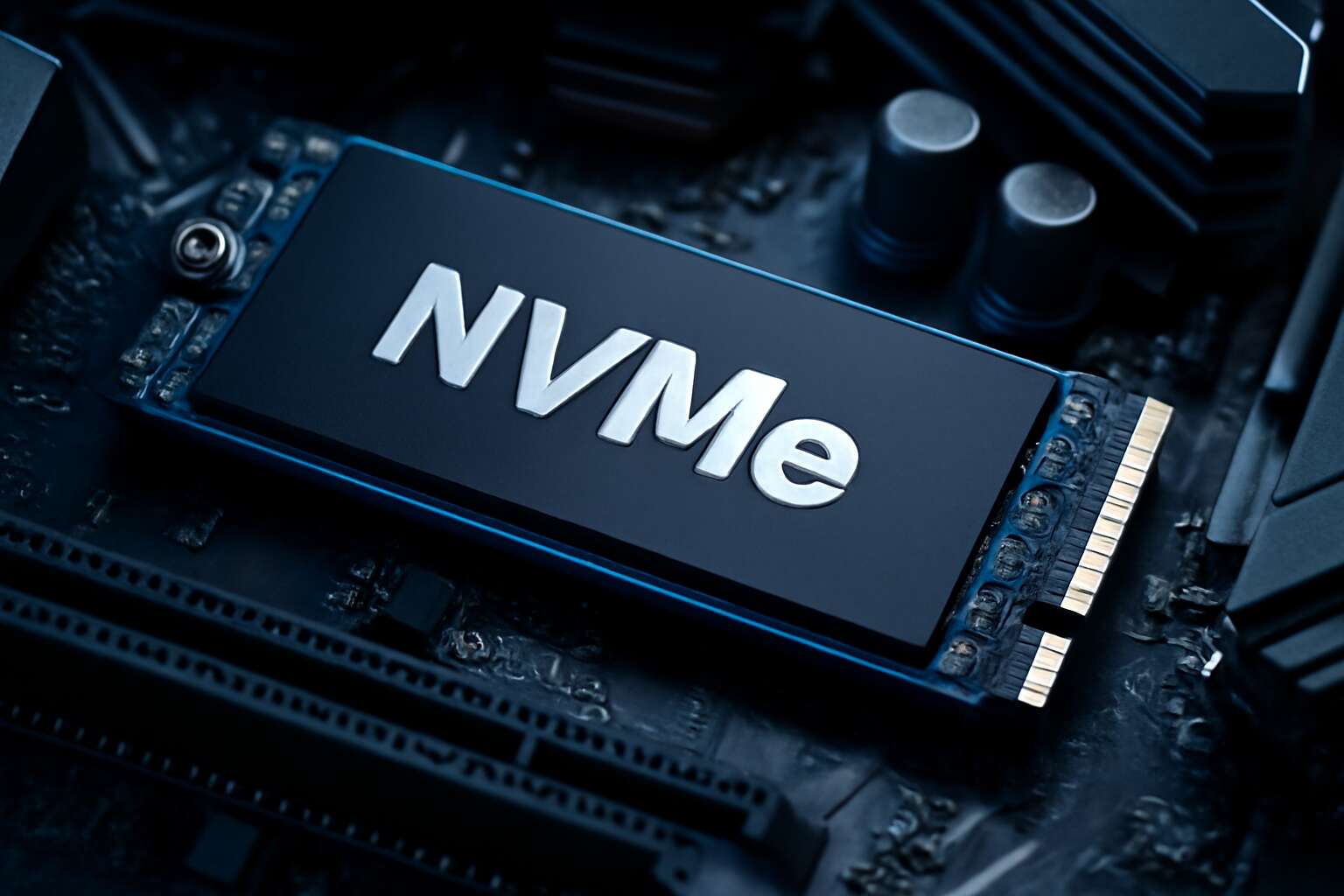
Understanding NVMe
Definition of NVMe – What NVMe stands for and its primary purpose
In the realm of modern storage technology, understanding what NVMe means unlocks a universe of speed and efficiency. NVMe, or Non-Volatile Memory Express, is a protocol designed to harness the full potential of high-speed solid-state drives (SSDs). Unlike traditional interfaces that bottleneck data flow, NVMe whispers directly to the memory, allowing information to dance seamlessly—like sunlight filtering through leaves, swift and unobstructed.
Its primary purpose is to drastically reduce latency, making data transfer almost instantaneous, which is vital for both professionals and enthusiasts striving for peak performance. Think of NVMe as a highway for data—where vehicles (or information packets) travel at lightning speed, bypassing sluggish traffic jams of older standards. This innovation revolutionizes how we experience computing, providing a window into a future where speed isn’t just a luxury but an everyday reality.
- Enhanced data transfer speeds
- Lower latency for quicker access
- Optimized for modern, high-performance SSDs
History and Evolution – Origins of NVMe technology and its development timeline
The story of NVMe (Non-Volatile Memory Express) is a fascinating chapter in the ongoing evolution of data storage technology. It emerged from the necessity to overcome the limitations of older interfaces such as SATA and SAS, which couldn’t keep pace with the rapid advancements in high-performance SSDs. The development of NVMe began around 2011, driven by industry leaders seeking to unlock the true potential of non-volatile memory. This innovation was not just a technical upgrade but a philosophical leap—embracing speed, efficiency, and the seamless flow of information.
By 2013, NVMe had gained significant momentum, with the protocol being officially standardized by the NVM Express organization. This marked a turning point, laying the foundation for a new era of ultra-fast storage solutions. As the timeline progressed, the adoption of NVMe became more widespread, transforming how data centers, gaming enthusiasts, and professionals approached storage. Today, understanding what NVMe means is essential for anyone eager to stay ahead in the fast-paced world of technology—highlighting its role as a catalyst for innovation and performance.
Comparison with Other Storage Protocols – Differences between NVMe, SATA, and SAS protocols
Understanding what NVMe means requires a journey into the realm of cutting-edge storage protocols that redefine speed and efficiency. When comparing NVMe with traditional interfaces like SATA and SAS, the differences are nothing short of revolutionary. SATA, the venerable workhorse of early storage technology, was designed for spinning disks and cannot fully harness the potential of modern SSDs. SAS, while faster and more robust, still lags behind NVMe’s unparalleled performance.
NVMe operates on the PCIe (Peripheral Component Interconnect Express) bus, allowing it to communicate directly with the CPU. This direct connection minimizes latency and maximizes throughput, resulting in lightning-fast data transfer speeds. Unlike SATA and SAS, which often bottleneck data flow through multiple layers, NVMe’s architecture is optimized for non-volatile memory, making it ideal for demanding applications. To grasp the true power of what NVMe means, it’s helpful to consider how these protocols stack up:
- Speed: NVMe offers significantly higher read/write speeds—up to five times faster than SATA SSDs.
- Efficiency: The protocol reduces latency, enabling quicker access to data and smoother performance.
- Scalability: NVMe supports multiple queues, unlike SATA and SAS, which are limited to a single queue.
In essence, what NVMe means is a leap toward an era where data flows seamlessly, unlocking new horizons for data centers, gaming enthusiasts, and professionals alike. Its superiority isn’t just technical; it’s a gateway to innovation in the world of digital storage. As technology continues to evolve, understanding these differences becomes crucial for those seeking to harness the full potential of modern storage solutions in South Africa and beyond. The choice between protocols isn’t merely about speed—it’s about redefining how we interact with data itself!
How NVMe Works
NVMe Architecture – Design and architecture of NVMe interfaces
Understanding how NVMe works is akin to appreciating the finesse behind a finely tuned race car—speed, efficiency, and precision are paramount. At its core, NVMe (Non-Volatile Memory Express) is a protocol designed specifically for modern solid-state drives, enabling them to communicate directly with a computer’s CPU through a high-speed PCIe (Peripheral Component Interconnect Express) interface. This streamlined architecture minimizes latency and unlocks the full potential of flash memory, making it a game-changer in data transfer speeds.
The architecture of NVMe interfaces is a masterclass in minimalist design—reducing the layers and bottlenecks that traditional storage protocols like SATA or SAS often suffer from. Instead of relying on older, slower communication pathways, NVMe employs a scalable command queueing system that allows thousands of commands to be processed simultaneously. This innovation means that what nvme means in practical terms is a quantum leap in performance, especially for data-intensive applications.
For those who appreciate the intricacies, it’s worth noting that NVMe’s design includes multiple features such as low latency, high IOPS (Input/Output Operations Per Second), and efficient power management. To truly grasp how NVMe architecture revolutionizes storage, consider this list of key elements:
- Direct CPU communication via PCIe for minimal latency
- Multiple command queues enabling parallel processing
- Optimized for flash memory’s non-volatile properties
- Scalable architecture adaptable to various enterprise needs
In essence, what nvme means is a future where data transfer is no longer a bottleneck, but a seamless, almost effortless experience—an elegant ballet of hardware and software working in harmony to propel us forward in the digital age.
Command Queues and Parallelism – Understanding multi-queue technology and faster data processing
Understanding how NVMe works reveals a fascinating symphony of hardware and software harmonizing at unprecedented speeds. At the heart of this efficiency lies the concept of command queues—a game-changing innovation that allows NVMe to process thousands of tasks simultaneously. Unlike older storage protocols that rely on a single command queue, NVMe employs multiple queues, each capable of handling hundreds of commands, which significantly accelerates data processing. This multi-queue technology is what makes NVMe so powerful in data-intensive environments.
By leveraging parallelism, NVMe minimizes delays caused by bottlenecks, ensuring that the CPU remains engaged with minimal waiting time. The architecture enables direct communication with the CPU via PCIe, bypassing traditional, slower pathways. This streamlined data flow not only boosts throughput but also enhances overall system responsiveness. For those delving into the technical depths, it’s clear that what nvme means in practical terms is a leap toward near-instantaneous data transfer, transforming how we interact with digital storage.
Connection Types – Form factors and connection standards (M.2, U.2, PCIe)
When exploring what NVMe means, understanding its connection types is essential. NVMe drives come in a variety of form factors and standards, each tailored to different needs and system configurations. The most common form factors include M.2, U.2, and PCIe add-in cards, offering flexibility whether you’re building a sleek ultrabook or a high-performance server. These standards harness the lightning-fast capabilities of NVMe technology, transforming storage performance.
M.2 NVMe SSDs are renowned for their compact design—perfect for laptops and small desktops—yet they pack a punch in speed. U.2 drives, on the other hand, are typically larger, designed for enterprise environments with higher capacity and durability demands. PCIe add-in cards present another versatile avenue, fitting into standard desktop slots and delivering maximum throughput for demanding applications.
To illustrate, here’s a quick rundown of connection standards:
- **M.2**: Small form factor, ideal for laptops and ultrabooks, connects directly to the motherboard via a dedicated M.2 slot.
- **U.2**: Designed for enterprise use, connects through a U.2 port, facilitating hot-swapping and high-capacity storage.
- **PCIe**: Installed directly into a PCIe slot, offering the highest potential bandwidth for enthusiasts and professionals seeking top-tier performance.
Understanding these connection types is vital in appreciating what NVMe means—an adaptable, high-speed storage revolution that seamlessly integrates into diverse hardware landscapes with elegance and efficiency. South African tech environments, whether in burgeoning startups or established data centers, benefit immensely from these versatile connection standards—making NVMe not just a protocol, but a cornerstone of modern storage innovation.
Benefits of NVMe Technology
Speed and Performance – How NVMe delivers faster read/write speeds
In the realm of data storage, NVMe emerges as a luminous beacon, transforming the landscape with lightning-fast speed and unparalleled performance. When you ask, “what NVMe means,” you uncover a technology that catapults data transfer into a realm of near-instantaneous motion. Unlike traditional protocols, NVMe harnesses the power of multiple command queues, allowing data to flow in a seamless, parallel dance—effortless and swift.
This acceleration manifests in real-world applications—whether editing high-resolution media, running complex simulations, or managing vast databases—NVMe’s speed cuts through bottlenecks as a sword through silk. Its design enables read/write speeds that leave SATA and SAS protocols trailing behind, delivering a performance upgrade that feels almost poetic in its precision. For those seeking to unlock the true potential of their storage, understanding what NVMe means reveals a gateway to technological transcendence.
Reduced Latency – Lower latency advantages over traditional storage protocols
In the realm of cutting-edge data storage, the advantage of reduced latency cannot be overstated. NVMe technology, with its lightning-fast response times, dramatically cuts down the delay between a command and the data’s arrival. This means that when you ask, “what NVMe means,” you’re uncovering a system designed to minimize lag—transforming sluggish data exchanges into near-instantaneous reactions.
Unlike traditional storage protocols that often bottleneck data flow, NVMe leverages a sophisticated architecture of multiple command queues. This design allows for parallel processing, ensuring that data moves swiftly and smoothly through the system. The result? Enhanced efficiency and a seamless experience whether editing high-definition videos, managing large-scale databases, or running demanding applications.
For those seeking to push their storage capabilities into new territories, understanding what NVMe means reveals a powerful tool for reducing latency—delivering faster, more responsive performance that redefines what’s possible in digital innovation.
Enhanced Efficiency – Energy efficiency and thermal benefits
NVMe technology isn’t just about speed; it also brings remarkable benefits in energy efficiency and thermal management. By streamlining data pathways, NVMe drives consume less power during intense operations, which can lead to significant energy savings—crucial for data centers and high-performance computing environments. This efficiency extends beyond power consumption, as reduced heat output means less reliance on cooling systems, ultimately lowering operational costs.
In the quest for enhanced efficiency, NVMe’s architecture plays a pivotal role. Its design minimizes energy waste by executing commands swiftly and precisely. For users pushing their storage capabilities to the limit, this means a more sustainable and reliable performance. In fact, NVMe drives often feature robust thermal management systems that help maintain optimal operating temperatures, preventing overheating and preserving longevity.
Furthermore, the combination of lower power draw and intelligent thermal regulation results in a quieter, more eco-friendly computing experience. For those questioning what NVMe means, it’s clear that this technology not only accelerates data transfer but also champions a smarter, greener approach to digital storage. This dual benefit makes NVMe an indispensable tool in modern enterprise and enthusiast setups alike.
Use Cases and Applications
Gaming and High-Performance Computing – NVMe’s role in gaming rigs and data centers
In the fast-paced worlds of gaming and high-performance computing, the importance of rapid data transfer cannot be overstated. NVMe’s role in gaming rigs transforms virtual worlds into immersive experiences, with lightning-fast load times and seamless gameplay. Meanwhile, data centers leverage NVMe to handle massive workloads efficiently, ensuring that complex computations and data analytics proceed without bottlenecks. The true magic lies in its ability to deliver exceptional speed and reduced latency, making tasks that once took minutes now completed in seconds.
For gamers chasing the edge, NVMe drives mean quicker load screens and smoother frame rates. In high-performance computing environments, NVMe’s parallel processing capabilities enable the handling of vast datasets and AI workloads with ease. As a result, organizations and enthusiasts alike benefit from the enhanced efficiency that NVMe provides in demanding scenarios.
Professional Workstations – Impact on video editing, 3D rendering, and creative workflows
In the realm of professional workstations, understanding what NVMe means unlocks a new dimension of productivity and creative potential. For video editors and 3D rendering artisans, every millisecond counts—delays are the digital equivalent of a paint drying on a masterpiece. NVMe’s rapid data transfer capabilities mean smoother timelines, faster rendering, and less time staring at a progress bar that seemingly moves at glacial speed.
Imagine editing high-definition videos or complex 3D models where every second saved translates into hours of reclaimed productivity. NVMe drives excel in handling large files and rapid data access, making them an essential tool for creative workflows. They eliminate bottlenecks that traditionally hampered workflow efficiency, enabling artists and designers to focus on their craft rather than waiting for files to load.
For professionals pushing the boundaries of digital creativity, NVMe’s impact is undeniable. It’s not just about speed; it’s about transforming how work gets done, turning what used to take minutes into moments. As a result, those who leverage NVMe technology can experience an amplified creative flow, producing more in less time—an advantage that’s hard to beat in today’s competitive landscape.
Enterprise Storage Solutions – NVMe in enterprise data centers and cloud environments
When it comes to enterprise storage solutions, NVMe isn’t just a fancy acronym—it’s a game changer. In the bustling data centers and cloud environments of South Africa, where speed and efficiency are king, understanding what NVMe means can make or break your digital operations. These high-performance drives are designed to handle massive data loads with astonishing speed, transforming the way enterprise systems operate.
Imagine managing vast databases or streaming critical applications without the usual bottlenecks. NVMe’s architecture leverages multiple command queues and parallelism, allowing data to flow faster than ever before. For businesses relying on cloud infrastructure, NVMe drives provide the backbone for quick, reliable access to information, reducing latency and boosting overall productivity.
In essence, NVMe’s role in enterprise storage is about delivering rapid, scalable, and energy-efficient storage solutions. Whether deploying high-speed data centers or supporting complex AI workloads, understanding what NVMe means empowers organizations to stay competitive in today’s fast-paced digital landscape. With NVMe technology, the future of enterprise data storage is not just faster—it’s smarter.
Choosing NVMe Devices
Factors to Consider – Storage capacity, speed ratings, form factor compatibility
When selecting NVMe devices, understanding the key factors can make a significant difference in how you experience storage performance. Storage capacity is often the primary concern—whether you’re a gamer, a creative professional, or managing enterprise data, choosing the right size ensures you won’t run out of space when you need it most.
Speed ratings are equally critical. NVMe drives boast impressive read/write speeds, but these can vary based on the device’s specifications. Pay attention to the sequential and random I/O speeds, as they directly impact how quickly your applications load and process data. For those with specific hardware setups, form factor compatibility is vital—whether it’s M.2, U.2, or PCIe slots—ensuring your chosen NVMe device fits seamlessly into your system.
Ultimately, balancing these factors—storage capacity, speed ratings, and form factor compatibility—is essential for making an informed decision. After all, knowing what NVMe means is only the beginning; understanding how to leverage its advantages can transform your digital experience.
Compatibility – System requirements and motherboard support
Understanding what NVMe means is crucial for anyone looking to supercharge their storage setup. But before diving into high-speed SSDs, it’s essential to ensure your system is compatible. Not all motherboards play nice with NVMe drives, especially if they lack the necessary slots or support. Checking your system requirements is the first step on this journey—otherwise, you might be left staring at a shiny new drive with no way to plug it in!
Motherboard support for NVMe can vary widely. Some older systems only support SATA drives, making NVMe compatibility a non-starter. For those with newer hardware, look for slots like M.2 or U.2 that explicitly mention NVMe support. If you’re unsure, consulting your motherboard’s manual or manufacturer’s website can save you from a costly mistake. Here are some key points to consider:
- Ensure your motherboard has an M.2 slot that supports PCIe NVMe protocol.
- Verify that your BIOS or UEFI firmware is updated to recognize NVMe devices.
- Check if your motherboard supports PCIe 3.0 or higher for optimal performance.
Physical compatibility is just the tip of the iceberg. The connection type—be it M.2, U.2, or PCIe expansion cards—must align with your hardware’s capabilities. Plus, some systems might require BIOS tweaks or firmware updates to fully embrace NVMe drives. Knowing what NVMe means isn’t just about understanding the tech—it’s about making sure your system can handle it without throwing a digital tantrum. After all, the last thing you want is a fancy new NVMe SSD gathering dust because of compatibility issues!
Cost and Availability – Price trends and best value options
In the fast-evolving landscape of storage technology, the cost and availability of NVMe devices have become paramount considerations. As the demand for high-speed data transfer surges—especially in gaming, creative work, and enterprise solutions—so does the diversity of NVMe SSDs accessible to consumers and professionals alike. But understanding what NVMe means isn’t just about technical prowess; it’s about navigating a market where prices fluctuate unpredictably, influenced by global supply chains, manufacturing advancements, and technological breakthroughs.
Price trends for NVMe drives have generally followed a downward trajectory over the past few years. Initially a luxury for early adopters, NVMe SSDs are now more affordable than ever, offering remarkable value for those seeking to supercharge their systems without breaking the bank. When searching for the best value options, it’s wise to consider not only the sticker price but also the performance-to-cost ratio. Often, mid-range NVMe SSDs provide a sweet spot—delivering impressive speeds while maintaining a reasonable price point.
Availability can sometimes be a challenge, especially amid global supply chain disruptions, but the market is continually adapting. Popular brands like Samsung, Western Digital, and Kingston maintain steady supplies of reliable NVMe devices, ensuring that consumers across South Africa can access cutting-edge storage solutions. To maximize value, look out for sales and bundle deals that combine capacity with speed, transforming your storage upgrade from a mere expense into a strategic investment.
Future of NVMe Technology
Upcoming Developments – Emerging standards and innovations
As technology hurtles forward, the future of NVMe technology promises a symphony of innovation that will redefine data access and storage. Emerging standards are paving the way for even faster, more efficient interfaces, transforming the landscape of high-performance computing. This evolution is driven by the relentless pursuit of lower latency and higher throughput, making what NVMe means not just faster storage but a gateway to new realms of possibility.
Upcoming developments include the integration of PCIe 5.0 and beyond, doubling the bandwidth available for NVMe drives. This leap will enable data centers and gaming enthusiasts alike to experience unprecedented speeds. Innovations such as persistent memory express (PMem) and the advent of new form factors will further enhance scalability and versatility. For instance, the adoption of standardizations like NVMe over Fabrics (NVMe-oF) will facilitate seamless, high-speed access across vast networks, blurring the lines between local and remote storage.
- Enhanced compatibility with emerging hardware standards
- Implementation of advanced thermal management techniques
- Development of more energy-efficient protocols to reduce power consumption
- Expansion of multi-queue architecture for even greater parallelism
In South Africa and beyond, these advancements will empower professionals and gamers to push boundaries, unlocking new potentials in data-driven industries. The future of NVMe technology is a vivid tapestry woven with innovation, promising a landscape where speed, efficiency, and scalability flourish in harmony. Truly, understanding what NVMe means today is just the beginning—tomorrow holds a universe of possibilities waiting to be explored.
Integration with New Technologies – Next-gen interfaces like PCIe 5.0 and beyond
As the digital universe expands at an astonishing pace, the future of NVMe technology beckons with a promise of transformative innovation. Next-generation interfaces such as PCIe 5.0 are poised to revolutionize the way data is accessed and processed, doubling the bandwidth available for NVMe drives. This leap isn’t just incremental; it’s a quantum leap towards a realm where data flows with unprecedented velocity.
Imagine a world where high-performance computing and gaming seamlessly intertwine, powered by these advanced interfaces. The integration of PCIe 5.0 and beyond will unlock new dimensions of speed, pushing the boundaries of what NVMe means in practice. In essence, it turns storage into a vibrant conduit—an enabler of real-time experiences that once belonged solely to the realm of science fiction.
Emerging standards like NVMe over Fabrics (NVMe-oF) will further dissolve the barriers between local and remote storage, allowing for scalable, high-speed access across vast networks. This evolution is accompanied by innovations such as enhanced thermal management techniques and more energy-efficient protocols, ensuring that performance no longer comes at the expense of sustainability.
In the grand tapestry of technological progress, the integration of new hardware standards and form factors signifies that NVMe’s future is not just about speed but also about versatility and resilience. As these developments unfold, professionals and gamers in South Africa and beyond will find themselves at the cusp of a digital renaissance—where what NVMe means today is merely a glimpse of a boundless tomorrow!
Impact on Storage Industry – Predicted trends and market growth
The future of NVMe technology is poised to reshape the storage industry significantly. Market forecasts predict a compound annual growth rate (CAGR) of over 20% in the next five years, driven by increasing demand for ultra-fast data access. As NVMe continues to evolve, it will unlock higher speeds and lower latency, making it indispensable for high-performance computing, gaming, and enterprise solutions.
Technological advancements like PCIe 5.0 will double the bandwidth available for NVMe drives, enabling data transfer rates that were once unimaginable. This leap forward means faster workflows, smoother gaming experiences, and more efficient data centers. The integration of emerging standards such as NVMe over Fabrics (NVMe-oF) promises scalable, high-speed remote storage, bridging the gap between local and cloud environments.
- Increased adoption across data centers
- Growth in consumer and enterprise markets
- Enhanced energy efficiency and thermal management
As the industry invests in developing new form factors and connection types, what nvme means is becoming clearer—speed, flexibility, and resilience. These trends indicate a future where NVMe technology will be at the heart of digital transformation, especially for South Africa’s burgeoning tech landscape.

0 Comments